
Traditional vs. Modern Wall Paintings in Nepal – What Suits You Best?
Introduction
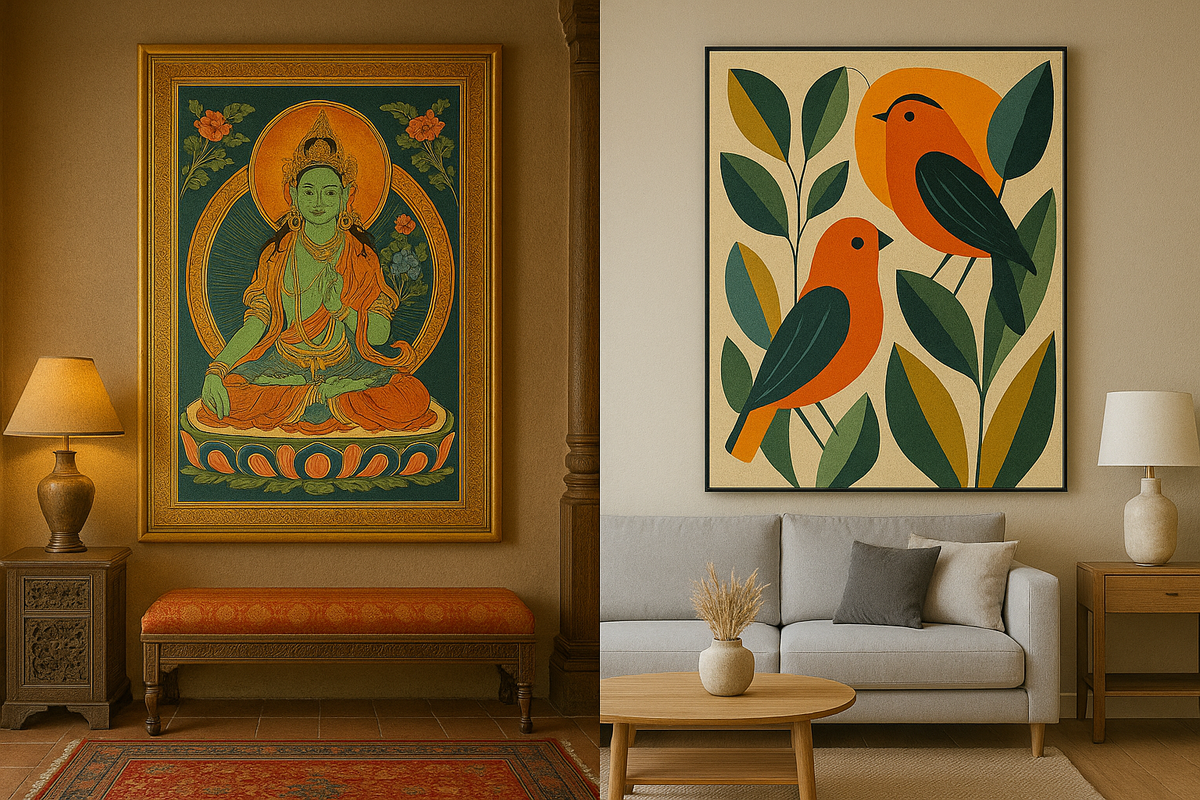
Wall paintings in Nepal have long been a reflection of the country's rich cultural heritage and evolving artistic expressions. From intricate traditional Nepali art adorning ancient temples to sleek modern wall decor Nepal trends in urban homes, wall art plays a significant role in interior design.
As Nepal embraces both its deep-rooted traditions and contemporary influences, homeowners face the exciting challenge of choosing between classic and modern styles. Whether you're drawn to the spiritual depth of Thangka painting or the bold simplicity of abstract designs, understanding these options will help you select the perfect Nepali home wall art for your space.
In this comprehensive guide, we'll explore the history, techniques, and contemporary trends of Nepali wall art, compare traditional and modern styles in detail, and provide practical advice to help you make the perfect choice for your home or office.
Section 1: The Rich Legacy of Traditional Wall Paintings in Nepal
Nepal's traditional wall art represents a centuries-old tradition that blends spirituality, symbolism, and exceptional craftsmanship. These artworks have been preserved in temples, monasteries, and heritage homes, telling stories of Nepal's cultural evolution.
Historical Roots of Nepali Wall Art
The tradition of wall paintings in Nepal dates back to the Licchavi period (400-750 CE), with evidence found in ancient temples and palaces. The medieval period saw this art form flourish under Malla kings, who were great patrons of art and architecture.
Key Features of Traditional Nepali Art
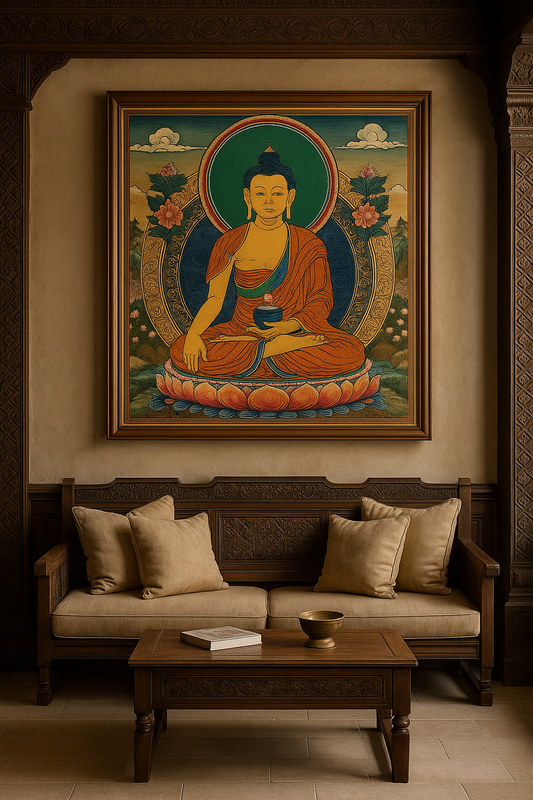
Thangka Painting: These sacred Buddhist artworks depict deities, mandalas, and spiritual scenes using natural pigments on cotton or silk. Thangkas serve as meditation aids and are often found in monasteries and homes.
Temple Murals: Historic sites like Pashupatinath, Swayambhunath, and Bhaktapur Durbar Square feature elaborate murals that narrate religious stories and document historical events.
Symbolic Motifs: Traditional designs incorporate elements like lotus flowers (purity), the eternal knot (interconnectedness), and the eyes of Buddha (omniscience), each carrying profound spiritual meaning.
The Artistic Process Behind Traditional Paintings
Creating traditional Nepali wall art is a meticulous process:
- Preparation of natural pigments from minerals and plants
- Canvas preparation with layers of gesso
- Detailed sketching following strict iconometric rules
- Layering of colors from background to foreground
- Gold leaf application for divine figures
- Final consecration ceremony by Buddhist monks
Why Choose Traditional Wall Paintings?
- Cultural Significance: Connects you to Nepal's 2000-year artistic heritage
- Spiritual Ambiance: Creates sacred spaces ideal for meditation and prayer
- Artisan Support: Helps preserve ancient techniques and support local artists
- Timeless Beauty: Classic designs that never go out of style
Section 2: The Contemporary Wave of Modern Wall Decor in Nepal
With urbanization and global influences, modern wall decor Nepal trends are transforming living spaces across the country. Young homeowners, designers, and businesses are embracing fresh approaches to wall art.
Characteristics of Modern Nepali Wall Art
Minimalist Designs: Clean lines, negative space, and monochromatic schemes create sophisticated looks.
Abstract Expressions: Bold brushstrokes, geometric patterns, and unconventional compositions.
Nature-Inspired Themes: Contemporary interpretations of mountains, rivers, and flora.
Mixed Media: Combining acrylics, metal, wood, and digital elements.
Emerging Trends in Nepali Modern Art
Digital Art Prints: High-quality reproductions of original artworks
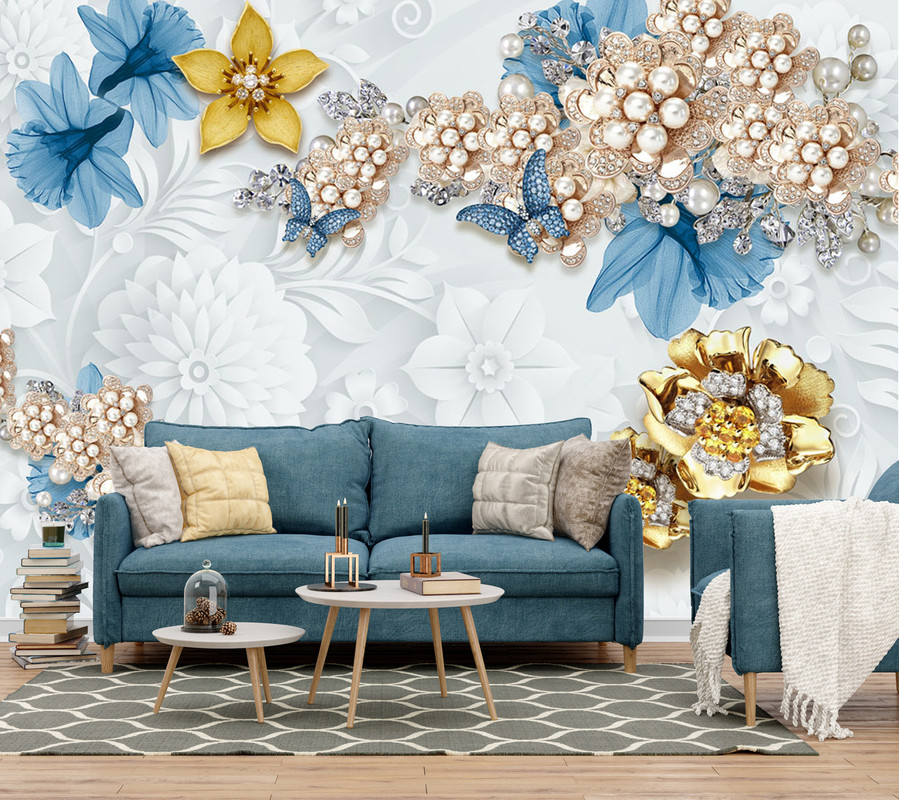
Textured Wall Panels: 3D art pieces that add depth to spaces
Cultural Fusion: Traditional motifs in contemporary color palettes
Interactive Art: Pieces that change with lighting or perspective
Why Opt for Modern Wall Decor?
- Versatility: Complements various interior styles from industrial to Scandinavian
- Personal Expression: Allows for unique, customized statements
- Space Enhancement: Can make small spaces appear larger
- Affordability: Often more budget-friendly than traditional pieces
Section 3: Comparing Traditional and Modern Styles
Choosing between traditional and modern Nepali home wall art requires understanding their distinct characteristics and how they interact with your space.
| Aspect | Traditional Wall Paintings | Modern Wall Decor |
|---|---|---|
| Aesthetic | Ornate, detailed, symbolic | Sleek, abstract, bold |
| Cultural Value | Deep spiritual meaning, historical significance | Contemporary relevance, global influences |
| Best For | Heritage homes, sacred spaces, cultural centers | Apartments, offices, modern residences |
| Maintenance | Requires careful handling, climate control | Generally low upkeep, durable materials |
| Investment Value | Appreciates over time, especially antique pieces | Trend-dependent, some pieces gain value |
| Customization | Limited by traditional rules and symbolism | Highly customizable to personal taste |
Can Both Styles Coexist?
Absolutely! Many contemporary Nepali homes successfully blend styles:
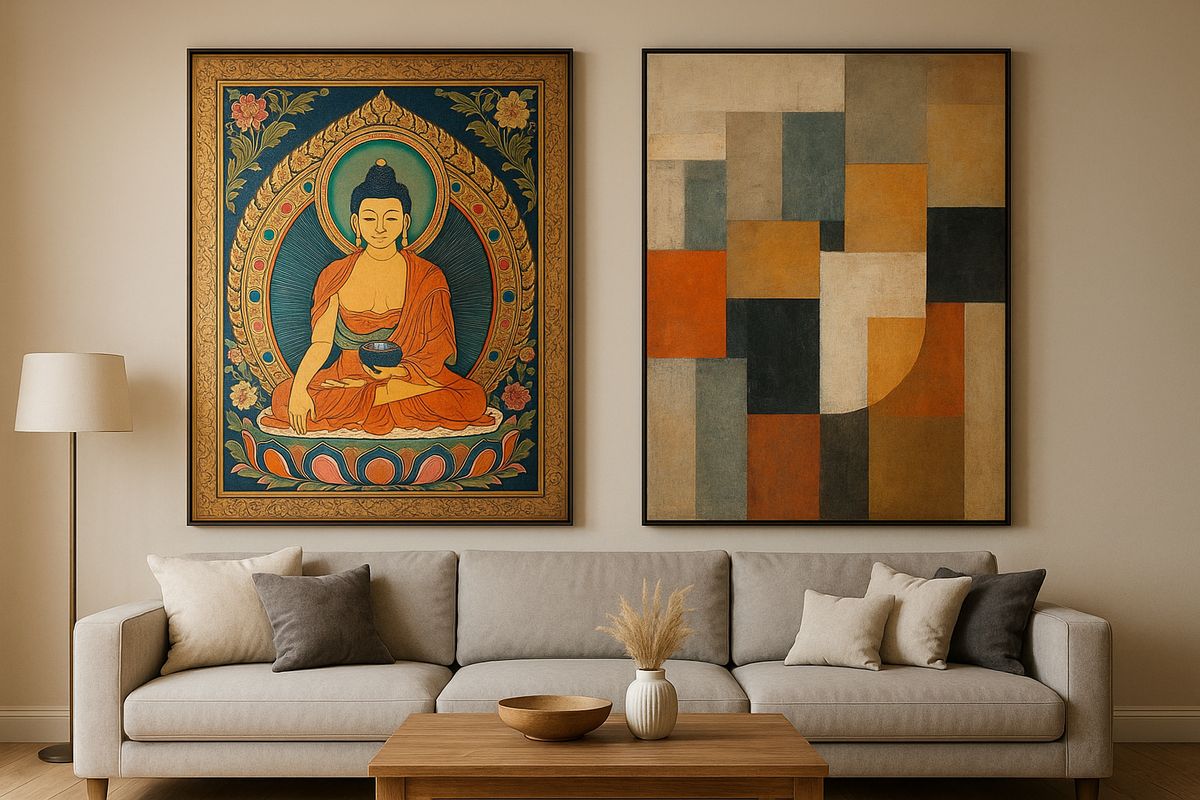
- Use a Thangka painting as a focal point in a modern living room
- Pair traditional mandalas with minimalist furniture
- Create gallery walls mixing both styles with cohesive color schemes
Section 4: Spotlight on Nepali Artists
Traditional Masters
Lok Chitrakar: Seventh-generation Thangka painter from Patan
Mina Kumari Bajracharya: Renowned for temple mural restoration
Contemporary Innovators
Tsherin Sherpa: Blends traditional motifs with pop art
Manish Harijan: Creates thought-provoking socio-political art
Section 5: Choosing What Suits You Best
Selecting the perfect wall art involves considering multiple factors about your space and personal style.
1. Consider Your Space
Room Function:
- Living Room: Large statement pieces or curated gallery walls
- Bedroom: Calming nature scenes or abstract pieces
- Dining Area: Vibrant works that stimulate conversation
- Home Office: Inspirational or focus-enhancing art
Architectural Style:
- Newari homes: Traditional murals or carved wood panels
- Modern apartments: Large-scale abstract or photographic art
- Rustic spaces: Textured pieces with natural materials
2. Where to Source Quality Art
- Traditional: Best Art Technology, Buddha Thanka Treasure, heritage shops
- Modern: Best Art Technology, Kathmandu Art Center, The Art Shop, online galleries
- Both: Nepal Art Council exhibitions, Himalayan Art Festival
Conclusion
Whether you choose the timeless elegance of traditional wall paintings in Nepal or the fresh appeal of modern designs, both styles bring unique charm to your space. Nepali home wall art is more than decoration—it's an expression of identity and culture.
As you explore Nepal's vibrant art scene, remember that the best choice is what resonates with you personally. Many homeowners find joy in mixing styles to create spaces that honor heritage while embracing contemporary living. Visit local studios, talk to artists, and let your walls tell your unique story.
Best Art Technology Nepal - Wall Art Specialists
Kathmandu's premier destination for premium canvas prints and custom wall paintings since 2018.
Contact Our Wall Art Experts
📞 +977-01-4987265
🌐 www.bat.com.np
Transform Your Space with Nepal's Finest Wall Art
Get expert advice on choosing between canvas prints, mural prints and wall paintings for your specific needs.